

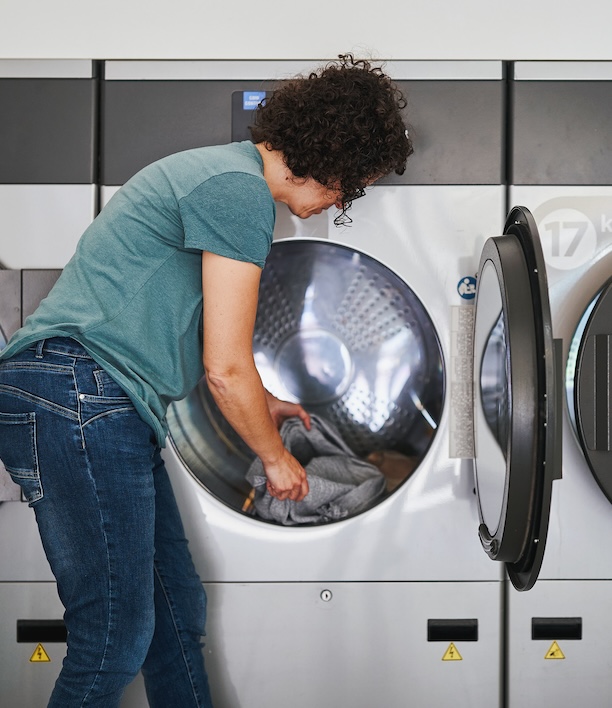
The Problem Isn't Just the Laundry. It's Not Knowing the Best Way to Handle It.
Having a washer and dryer at home removes laundry from the category of decisions. You run it when it needs running. The machine is there, it works, the process is automatic. Take that away — through a move, a broken machine, an apartment without hookups, or a building with unreliable shared facilities — and laundry stops being a chore and starts being a recurring problem that requires evaluation every single week.
That shift is more wearing than it sounds. Not because any individual option is particularly difficult, but because the absence of a default forces a decision where there wasn't one before. And decisions, even small ones, have a cost.
This page covers why that cost is real, what the options actually involve, and how to find an arrangement that removes the decision-making from the equation rather than just making it slightly more manageable.
Why Not Having a Machine Creates More Friction Than Expected
When a default disappears, it doesn't just leave a gap — it leaves a gap that has to be actively filled, repeatedly, under the cognitive weight of comparison.
Barry Schwartz's research on the paradox of choice established something that feels intuitive once named: more options don't improve outcomes — they increase the burden of deciding, which increases the likelihood of either making a worse choice or avoiding the decision altogether. For laundry without in-unit machines, this plays out predictably. The laundromat down the street, the pickup service you've heard of, the wash-and-fold shop two blocks over, the building machines that may or may not be available — every week, consciously or not, there's an evaluation happening. The comparison is never quite settled. And the decision that gets made is often the path of least resistance rather than the path that actually fits.
This is what cognitive load theory describes as the cost of open decisions: mental resources consumed by options that haven't been resolved. Laundry without a machine is structurally an open decision — one that stays active until a clear default is established.
There's also what researchers call the administrative burden of evaluation: the time and energy spent researching, comparing, and deciding — separate from the time actually spent doing the thing. For something as recurring as laundry, that overhead compounds. Most people managing without in-unit machines have spent more cognitive energy on the laundry question than they would have spent on the laundry itself if a machine had simply been available.
Which Situation You're In — and Where It Points
Not having reliable laundry access looks different depending on how you got there. The situation shapes the solution.
Apartment without hookups or unreliable shared machines. This is a structural, ongoing reality rather than a temporary disruption. The question isn't how to bridge a gap — it's which external option becomes the actual laundry system going forward. The economics and logistics of a long-term arrangement matter more here than a short-term fix.
Broken machine. The priority is handling the immediate backlog and bridging the repair or replacement window — typically one to three weeks — without establishing habits around a temporary situation. A one-time or short-term pickup order is often the most practical move: it clears the backlog without the time cost of a laundromat visit and doesn't require a new ongoing routine.
Laundromat fatigue. The laundromat became the default because it was available, not because it was chosen. If the friction has accumulated to the point where it's affecting the week in ways that feel disproportionate to a single chore, the question isn't how to make the laundromat better — it's whether a better default has simply never been set up.
Pre-move or recent move. The window to make this decision well — before urgency creates a default — is available right now. Treating laundry as a deliberate setup decision rather than something to figure out after arrival is the move that avoids a month of unnecessary friction.
Common Challenges




The Options, With Real Numbers
Self-service laundry. Laundromats and shared building machines keep the task fully in your hands. Typical cost: $2–$4 per wash cycle, $1.50–$3 per dryer cycle — roughly $3.50–$7 per load out of pocket, plus the time cost of going there and waiting. For most households running two to three loads per week, that's $400–$1,000 per year in cash, and somewhere between 100 and 200 hours of time on-site. For people with flexible schedules and a well-located laundromat, workable. For people whose weeks are already full, this tends to be where the friction accumulates.
Wash-and-fold drop-off. You drop off the laundry, someone else washes, dries, and folds it, and you pick it up done. Typical cost: $1.25–$2.00 per pound, with most single-person households sending 8–12 pounds per week. Two short trips replace the full laundromat block. A useful middle path for people who don't want to sit on-site but aren't ready for full pickup service.
Pickup and delivery. Your laundry is collected from your door, handled completely, and returned clean and folded within 24 to 48 hours. Typical cost: $1.50–$2.50 per pound — in a similar range to wash-and-fold drop-off, with the time cost of both trips removed. Pickup windows are flexible; you don't need to be present for handoff. Care preferences — temperature, items to keep separate, anything delicate — are noted at scheduling and followed by the provider. For people whose primary frustration is the time and logistics of going somewhere, this is the option that addresses the friction at its source.
Pricing varies by location. The current pricing page shows what's available in your area.
Choosing Once, Clearly — The Decision Guides
The most useful thing this page can do is help you make this decision once, with the right information, rather than keep revisiting it every week. Each of the guides below is built for a specific version of the decision.
If you're weighing whether the cost of a service is actually justified — and want to see the full comparison of what doing laundry yourself is costing when time is part of the calculation — Is a Laundry Service Worth It? Cost, Time, and Stress Compared works through it honestly. This one is for people who are skeptical of the math and want to see it laid out.
If you're specifically trying to decide between continuing with the laundromat and switching to pickup — and want a direct, side-by-side comparison of what each one actually involves week to week — Pickup vs. Laundromat: Which Is Actually More Convenient? makes that comparison without pulling punches. This one is for people who've been at the laundromat for a while and are finally asking whether something better exists.
If you've already decided you want to try a pickup service but aren't sure how it actually works — what the pickup involves, what happens to your clothes, what the first order looks like — How Laundry Pickup and Delivery Actually Works covers the full process from scheduling to delivery. This one is for people who are ready to try it and just want to know what to expect.
The Shortest Version of All of This
Laundry without a machine at home is a solvable problem. The reason it stays unsolved for most people isn't lack of options — it's the friction of evaluating options that never quite gets resolved. The goal is a clear default that removes laundry from the weekly decision pile: one arrangement, set up deliberately, that handles the chore without requiring evaluation every time it comes up.
The guides above are designed to get you there. The location tool below tells you what's actually available where you live.
Find Out What's Available Near You
Pricing, availability, and turnaround times vary significantly by location. Enter your zip code to see what laundry pickup services are operating in your area and what local providers are currently charging.