
The Hidden Weight
of Laundry

What Your "Floordrobe" Might Be Telling You About Your Mental Health
At Poplin, we've always believed that laundry is about more than clean clothes—it's about time, peace of mind, and overall well-being. That's why we're excited to announce a new partnership with ADHD coach Jeff Rice, whose work sheds light on the powerful (and often overlooked) connection between laundry and mental health.
Together, we're starting a conversation that many people quietly live with every day: why does laundry feel so overwhelming—and what does it say about us when it piles up?
When Laundry Becomes More Than a Chore
Laundry is one of those tasks that never really ends. It cycles through our lives weekly—sometimes daily—and yet it can carry an outsized mental load.
New survey findings from Poplin, based on responses from 600 Americans, reveal just how deeply laundry affects our emotional well-being:
- 54% of Americans consider laundry one of their top stressors or annoyances
- 44% say doing laundry—or even thinking about it—makes them anxious or unhappy
- 49% spend more than three hours per week doing laundry
- Only 28% say their dirty laundry never piles up on the floor
These aren't just statistics—they point to a shared experience of overwhelm.
According to Jeff Rice, that overwhelm isn't random.
The “Floordrobe” Isn't Laziness
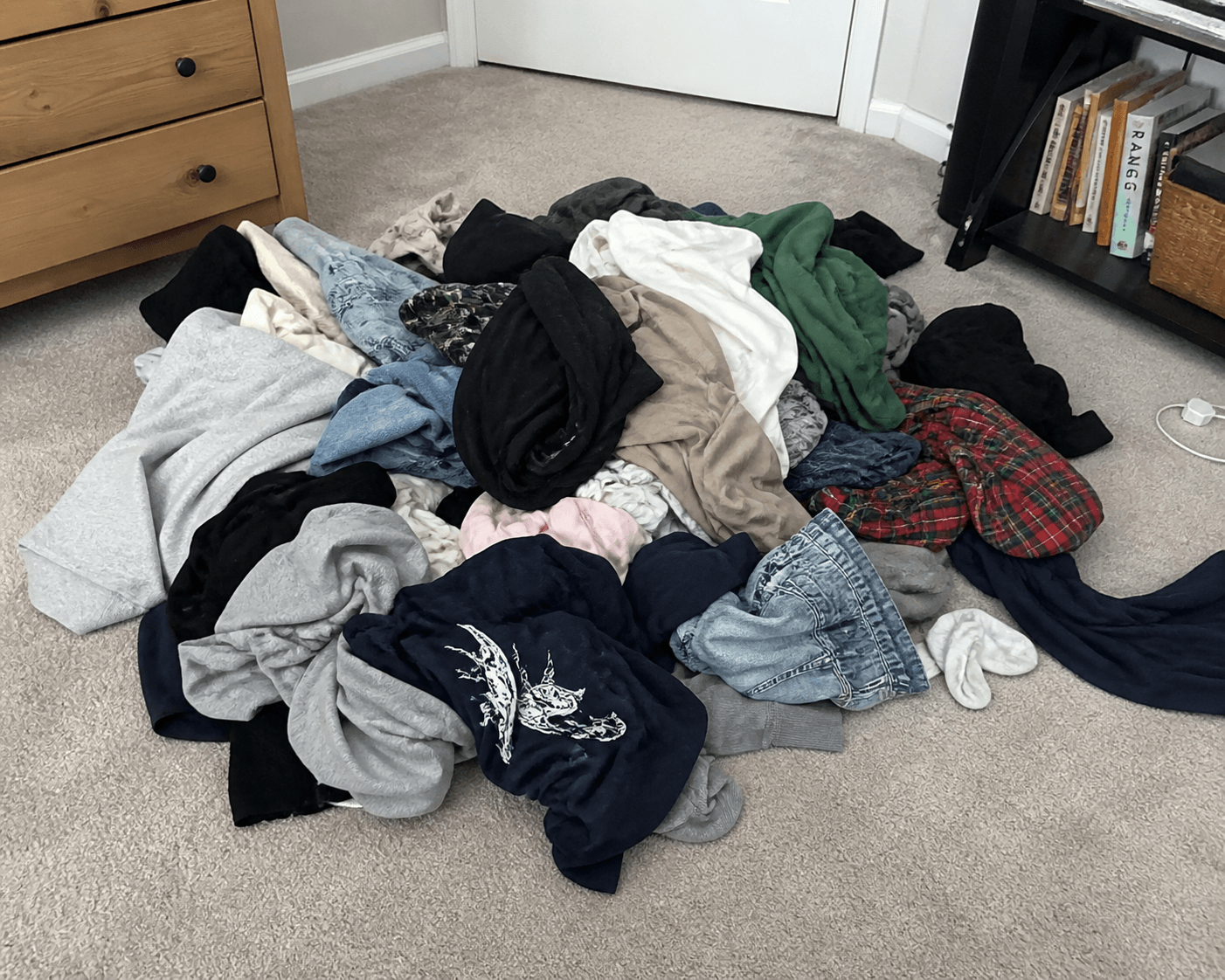
If you've ever had a pile of clothes living on a chair, the floor, or “that one corner,” you're not alone. There's even a name for it: the floordrobe.
Jeff Rice explains that a floordrobe is rarely about laziness. Instead, it can be a signal of cognitive overload—especially for people with ADHD or executive function challenges.
When the brain is juggling too many decisions, even simple tasks like sorting, folding, and putting away clothes can feel disproportionately difficult. Each requires attention and energy. When those are in short supply, the system breaks down—and the floordrobe grows.
In Jeff's words, “The pile isn't the problem. It's a symptom.”
The Mental Health Ripple Effect
Our survey findings reinforce Jeff's insights. Laundry doesn't just stay in the laundry room—it spills into other areas of life:
- 38% of people say they've delayed something important because of laundry
- 19% have avoided inviting someone over due to visible laundry
And it doesn't stop there—laundry even impacts relationships:
- 44% would judge a romantic partner based on their laundry habits
- 32% of people in relationships have argued about laundry
- 21% say if they could eliminate one chore forever, it would be laundry (second only to cleaning toilets)
When a routine task starts affecting your schedule, your home life, and your relationships, it's no longer “just laundry.”
Reframing the Way We Think About Laundry
One of the most important takeaways from our partnership with Jeff Rice is this: struggling with laundry doesn't mean you're disorganized, careless, or failing at adulthood.
It often means:
- You're overwhelmed
- Your systems aren't working for you
- Or your brain processes tasks differently
Instead of shame, Jeff encourages curiosity:
- What part of laundry feels hardest?
- Is it starting, finishing, or switching between steps?
- Are there too many decisions involved?
Understanding the “why” can be the first step toward relief.
Making Life Lighter (Literally and Mentally)
At Poplin, our mission is simple: take laundry off your plate so you can focus on what matters most.
For some, that means reclaiming hours each week.
For others, it means reducing stress, easing tension at home, or finally clearing that floordrobe.
Because when you remove the friction of laundry, something bigger happens:
- You feel more in control
- Your space feels calmer
- Your mind has room to breathe
You're Not Alone
If your laundry has been piling up, if it's causing stress, or if it's quietly affecting your life in ways you didn't expect—you're far from alone.
The data proves it. Jeff's insights explain it. And together, they point to a simple truth:
Laundry is human. And sometimes, it's hard.
We're proud to partner with Jeff Rice to keep breaking the stigma around everyday struggles like these—and to help people find solutions that actually work for their lives.
Common Challenges